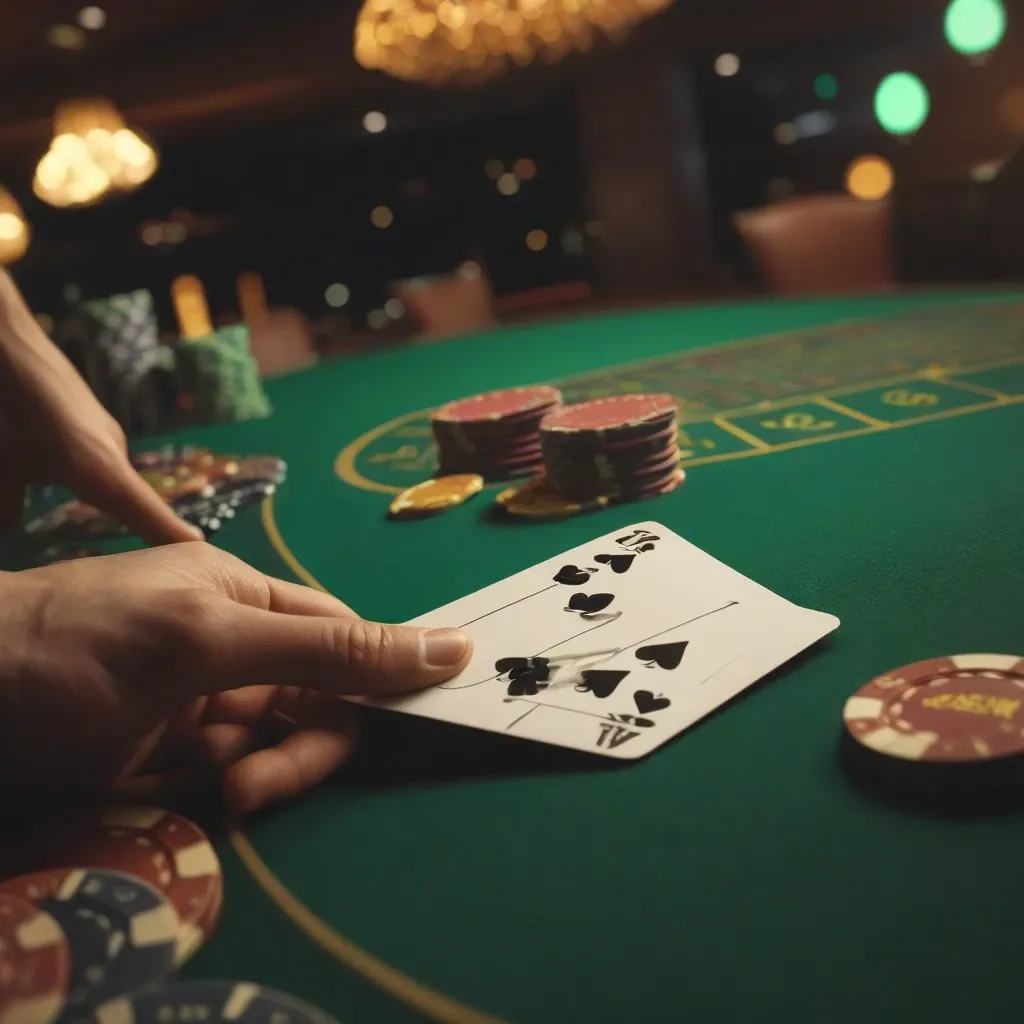
Most players sit down at any blackjack table without realizing small rule changes can swing the house edge by over 1%. I learned this the hard way years ago, stubbornly losing at a 6:5 payout table while wondering why my supposedly perfect strategy never seemed to work. That’s when the power of variation selection finally clicked for me.
In my years of analyzing blackjack, I’ve found three variations consistently offer the best odds: European Blackjack, Atlantic City Blackjack, and Spanish 21. Each features distinct rule sets that tip the house edge favorably—from dealers standing on soft 17 to the availability of late surrender and bonus payouts.
This guide breaks down these top blackjack games, compares their house edge numbers, and pairs each with the precise blackjack strategy that maximizes your chances. By the end, you’ll know exactly which tables to seek out and which to avoid entirely.
Why Rule Variations Matter More Than You Think
Blackjack isn’t just about hitting 21 or not busting. The real game is played before the first card drops—when you pick a table. Tiny rule tweaks that seem irrelevant can shift the house edge by a full percentage point or more. That’s the difference between a game where you have a fighting chance and one where your bankroll evaporates in an hour. The most impactful rule: dealer hits soft 17 (H17) vs. dealer stands (S17). That single change adds roughly 0.2% to the house edge. Doesn’t sound like much? Multiply it over hundreds of hands, and it’s a quiet leak. Then layer on doubling restrictions. A table that allows doubling after split (DAS) shaves about 0.13% off the edge. If they don’t allow it, you lose flexible plays—like splitting 8s against a dealer 6 and doubling down on one of them. Even worse: no surrender. Late surrender, the kind you can still find, reduces the house edge by about 0.07%. Combine three bad rules—dealer hits soft 17, no doubling after split, no surrender—and you’re looking at a 0.4% swing compared to the best rules. A player once ignored all these details, jumped into a 6-deck H17 game with no DAS, and lost twice as fast as necessary. The table looked standard, but the rules were brutal. Meanwhile, less important rules like number of decks get overhyped. Sure, single-deck can be great—but only if it pays 3:2. If it pays 6:5, that single deck is a trap. More on that below.
The Deck Count Dilemma: Single vs Multi-Deck Myths
Many players believe single-deck blackjack is always the best option. They see one deck, think lower house edge, and sit down without checking the payout. That’s a costly mistake. The vast majority of single-deck games today pay 6:5 instead of the traditional 3:2. That 6:5 payout adds about 1.4% to the house edge—more than enough to wipe out the natural advantage of having only one deck. In fact, a 6:5 single-deck game is worse than a well-ruled 6-deck game paying 3:2. Tourists often celebrate finding a single-deck table, only to lose faster due to that lousy blackjack payout. The real advice: look for any game—single, double, or multi-deck—that pays 3:2. Then check the other rules. A 4- to 8-deck shoe with S17, DAS, and late surrender gives you far better odds than a single-deck 6:5 ripoff. Don’t be fooled by the deck count; the payout is king.
Key Rule Features to Seek (and Avoid)
Here’s a quick checklist to scan before you buy chips. Seek: dealer stands on soft 17, doubling after split allowed, late surrender available, and blackjack pays 3:2. Avoid: dealer hits soft 17, no doubling after split, no surrender, and especially 6:5 blackjack payouts. Early surrender is almost extinct—good luck finding it. But late surrender still exists in many casinos, and it reduces the house edge by roughly 0.07%. An example: the dealer shows a 10, you hold 16. Surrendering saves you half your bet—a smart move that many players don’t even know exists. These rules vary by casino, location, and even table minimum. Higher minimum tables often have better rules. Always ask or read the felt. A little rule awareness turns a losing session into a smarter one.

Top Blackjack Variations Worth Playing
After testing dozens of variations across casinos worldwide, I consistently recommend these three for their low house edge and enjoyable gameplay. Let’s get straight to it: the blackjack world is more than just the standard game you see in movies. These three variants have distinct rules that can actually swing the odds in your favor if you know what you’re doing. They are the holy trinity of player-friendly blackjack, each offering a unique twist on the classic formula that keeps things fresh and profitable. You will not find a better starting point for your blackjack journey than these three heavy hitters.
European Blackjack
First up is European Blackjack, a game that plays a little differently from its American cousin. The most crucial difference is the no-hole-card rule. This means the dealer doesn’t take their second card until after you’ve finished playing your hand. On the surface, this seems minor, but it’s a massive safety net. If the dealer ends up with a blackjack, you only lose your original bet, not the extra money you put in for doubles or splits. This reduces your risk on aggressive plays significantly. The house edge typically sits around 0.4% with basic strategy, which is fantastic. Many players get spooked by the ‘no peek’ nuance, but they shouldn’t. I always advise players to memorize the same basic strategy chart—it works for European Blackjack too. The only thing you need to be aware of is that you won’t see the dealer’s hole card before deciding whether to split or double. It feels like a gamble, but the math is on your side. It’s widely available both online and in European casinos, so finding a table is rarely a problem.
Atlantic City Blackjack
Now, let’s talk about a true classic. I consider Atlantic City rules the gold standard for multi-deck games. This variation is famous for its late surrender option, which is a golden ticket for smart players. Late surrender allows you to fold your hand after seeing the dealer’s upcard, losing only half your bet. This is a powerful tool. The game is played with an eight-deck shoe, which usually increases the house edge, but the favorable rules bring it right back down to a respectable 0.4% to 0.5%. The strategy adjustment here is crucial: you absolutely must surrender certain hands. For instance, surrender 16 vs 10 and 15 vs 10; never surrender if you have a pair of 8s, always split. I have a personal story about this. A friend once avoided a loss by surrendering 16 vs dealer 10—he later thanked me for teaching him that. It’s those little decisions that add up to real money over time. The dealer stands on soft 17, which is another plus. This is a game that rewards patience and discipline.
Spanish 21
Finally, we have Spanish 21, which is a wild ride. Spanish 21 removes the 10s from the deck, which sounds bad at first, but the player-friendly bonus rules more than compensate for this. You might think losing four cards from each suit would be a disaster, but the payouts are where this game shines. The best features include: a player blackjack always wins, even if the dealer also has a 21, and you get bonus payouts for specific hands like a 5-card 21, a 6-7-8 suited, or a 7-7-7. The house edge is around 0.4% if you play the correct strategy. The strategy adjustments are significant. You have more hitting opportunities, and you can double down on any hand, including soft hands. The caution here is huge: the strategy is different; don’t use standard blackjack basic strategy. Get a Spanish 21 chart. I once hit a 7-card 21 for a 3:2 bonus—it’s exhilarating. This is not a game you can win without preparation, but it’s full of high-variance excitement that pays off big when you least expect it.
How to Choose and Adapt Your Strategy for Each Variation
The most common mistake I see is players using a single strategy for all variations. That’s like using a map for the wrong city. You wouldn’t use a street map of Chicago to navigate New York, would you? The same logic applies to blackjack strategy variations. Each game variation has subtle rule changes that drastically alter the optimal way to play. You need to match your approach to the specific table you’re sitting at.
First things first, you have to check the rules before you sit down. Look for the dealer’s hit or stand on soft 17. This is a critical rule. Find out if you can double down after splitting or if you can surrender. These details aren’t just minor footnotes; they are the building blocks of your strategy. After you know the rules, you need to use a basic strategy chart that is tailored to that specific deck count and rule set. Don’t just rely on a generic chart from memory. Take the time to study the correct one.
You should also avoid any variation that doesn’t offer a 3:2 blackjack payout. It’s a major red flag. Many online casinos let you filter games by these rules, which makes it easier to find a good game. Use that to your advantage. For a quick reference, remember this: for European blackjack, use the standard chart with no peek adjustment. For Spanish 21, you need to use its unique chart. And for Atlantic City, you’ll use the standard chart with surrender decisions.
Common Misconceptions That Cost You Money
There are some blackjack misconceptions that seem to never die. The most harmful one is the insurance bet. You should never make the insurance bet. It has a high house edge of around seven percent, making it a poor bet for the player. It’s a side bet that pays 2:1 if the dealer has a blackjack, but it’s not worth the risk. The odds are not in your favor, and it’s a quick way to lose extra money.
Another universal rule is to always split aces and eights. I’ve seen players split 10s against a 6, turning a winning hand into two losing ones. That’s a classic mistake. These rules are universal, even in Spanish 21. However, there is an exception in Spanish 21: don’t split aces because you can’t double after, but you can hit them. So, you should not split aces in that game. This shows that even basic principles have exceptions. It’s crucial to understand the specifics of the game you’re playing, because a strategy that works in one can be a costly error in another.

Final Thoughts: Play Smart, Play the Right Variation
Blackjack comes down to the choices you make before cards hit the felt. The best variations—Spanish 21, Blackjack Switch, and classic S17 multi-deck games—each offer smart players a real shot, with house edges lurking in that sweet 0.2% to 0.6% range if you know where to look. The blackjack tips that truly matter aren’t flashy—they’re about picking the right battlefield.
Next time you enter a casino or open an online lobby, check the rules first. Your wallet will thank you. “Mastering variation selection has improved my win rate more than any card counting system ever could,” admits one seasoned pro. Keep learning, stay disciplined, and let the math work for you.